← Default view

BA / FA / PO Reference · 2026

Functional Specs
Toolkit

Purpose-built tools beat generic LLMs for consistent spec output. Structure acceptance criteria with EARS "shall" statements when specs feed AI coding agents. AI drafts — humans approve, always.
7 tools compared 4 EARS types 3 prompt templates 21 citations 7 min read
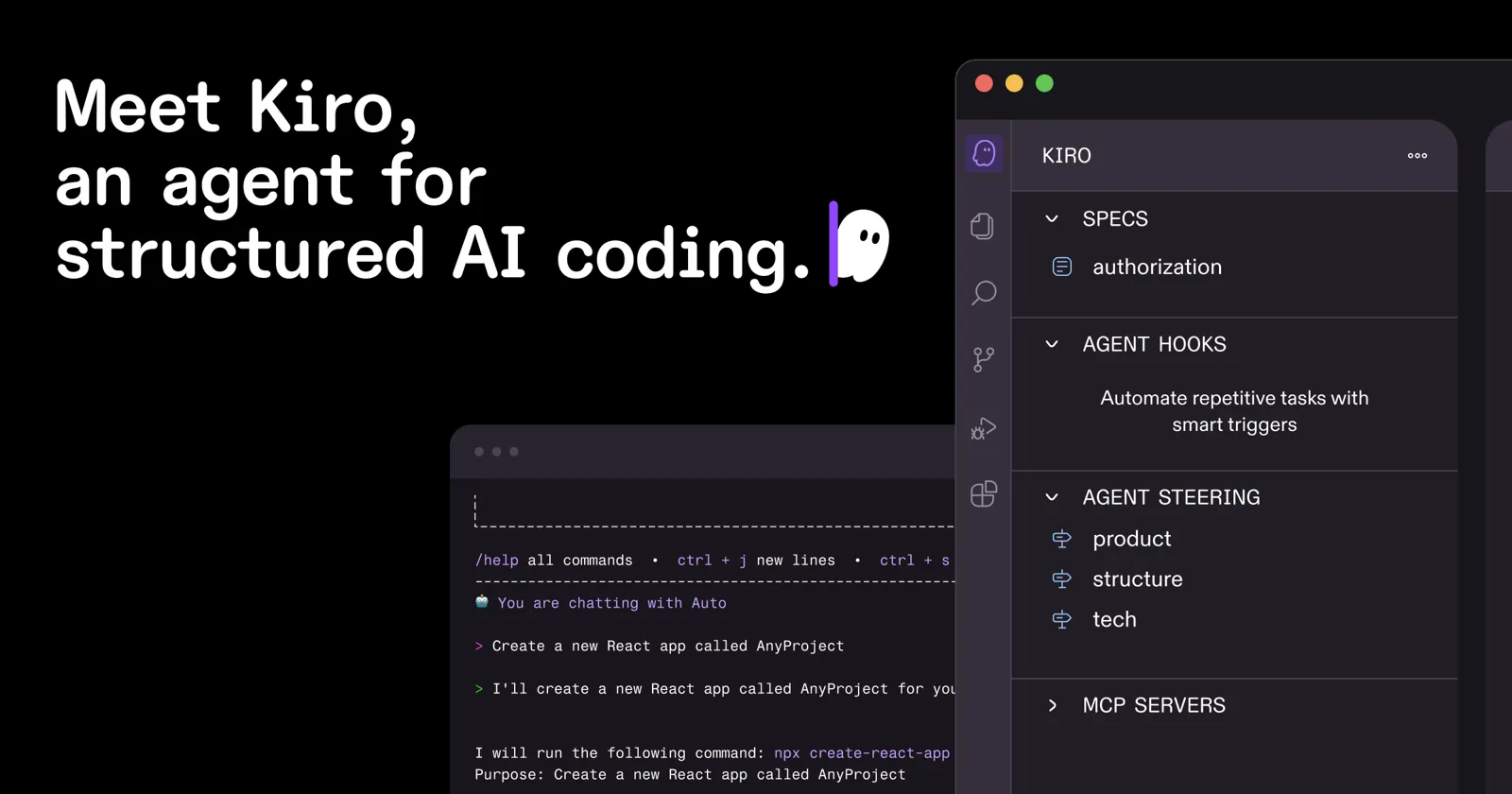
Kiro — AI-native spec IDE
01

Tool Matrix

7 tools · choose by integration, AI-agent fit, and draft speed

AI-agent optimised Partial Human-first
Kiro AI ✓

AWS greenfield; EARS → code pipeline. Generates requirements, design doc, and task list before any code runs. [9]

⚡ Minutes

AWS-native; limited brownfield support

ChatPRD Human

Stakeholder-facing PRDs; PM coaching; retains organisational memory across sessions. [5]

⚡ 5–10 min

No customer evidence layer

Keeborg AI ✓

Full spec stack for AI coding agents — generates CLAUDE.md and .cursorrules alongside 8 interconnected spec documents. [3]

⚡ 90 sec

New entrant; niche ecosystem

Copilot4DevOps Partial

Azure DevOps-native FRDs, user stories, and test cases. Elicit feature generates child stories from parent work items. [18]

⚡ Minutes

Azure DevOps only

Jama Connect Partial

Regulated industries; INCOSE/EARS inline scoring. Advisor checks requirements against EARS rules as you type. [6]

⚡ Minutes

Enterprise pricing

aqua Human

Voice-to-requirement; rapid BA field capture. Converts voice notes into structured requirements in 15 seconds. [7]

⚡ 15 sec

Shallow on complex logic

GitHub Spec Kit AI ✓

Portable, MIT-licensed, agent-agnostic spec-driven dev framework. Works with any AI coding agent. [10]

⚡ Minutes

High review burden; many files

02

EARS Quick Reference

Rolls-Royce → adopted by Airbus, Bosch, NASA, Siemens [12] · use when specs feed AI coding agents

Core pattern: While <precondition>, when <trigger>, the <system> shall <response>. — Mix clauses as needed.

Ubiquitous
The [system] shall [response].
eg: The system shall encrypt all PII at rest using AES-256.
Event-Driven
When [trigger], the [system] shall [response].
eg: When a payment fails, the system shall notify the user within 5 seconds.
State-Driven
While [state], the [system] shall [response].
eg: While unauthenticated, the system shall redirect to /login.
Conditional
Where [feature enabled], the [system] shall [response].
eg: Where MFA is enabled, the system shall prompt on each new device.
03

Spec-Driven Development Pipeline

Specs become agent-executable contracts, not handoff artifacts [10]

1
Spec-first
Specs precede code, then are discarded. Lowest overhead, but specs drift from implementation immediately.
⚠ highest drift risk
2
Spec-anchored
Specs persist alongside code and update as features evolve. Cross-role authorship keeps them current.
✓ practical target
3
Spec-as-source
Humans edit only specs, never code directly. AI derives implementation from specs alone. Currently experimental.
⚗ experimental
📋
Requirements
user stories + EARS ACs
🏗
Design Doc
architecture + constraints
Task List
reviewed before code runs
🤖
AI Generates
code from spec contract
👁
Human Review
intent, not syntax
04

Prompt Templates

Role + Context + Task + Constraints + Output format [16] · works with Claude, ChatGPT, Copilot

📝 Meeting Notes → Functional Requirement
You are a senior BA. Here are raw stakeholder notes: [paste notes] Convert to one EARS-formatted functional requirement covering: - Functional context - Business logic (IF/WHEN/THEN, numbered) - Happy path (numbered steps) - Unhappy path (numbered steps) - Open questions
📖 User Story + Acceptance Criteria
You are a product owner. Create a user story for: [feature description] Format: "As a [persona], I want [goal] so that [benefit]." Add 5 acceptance criteria in EARS event-driven format (When/Then). Flag edge cases and missing non-functional requirements.
🔍 FRD Gap Analysis
You are a senior requirements engineer. Review this FRD: [paste document] Identify: (1) Ambiguous or missing requirements (2) EARS structure violations (3) Missing non-functionals: performance, security, a11y Output as a numbered list with severity: high / medium / low.
05

Platform-Native Integrations

Avoid context-switching — use what's already in your ecosystem

Jira / Atlassian Rovo
Drafts acceptance criteria from Confluence docs; flags gaps in user stories. Draws on connected documentation automatically. [17]
→ "Generate AC" in ticket view
Azure DevOps / Copilot4DevOps
Generates FRDs, user stories, and test cases from parent work items. One-click backlog generation from a PRD. [18]
→ Elicit from parent work item
Confluence Rovo
20+ agents: summarise, Q&A, content outline. Converts meeting notes into structured requirement pages automatically.
→ Convert notes to requirements page
Notion AI
Agents run autonomously for up to 20 minutes. Process sprint retrospectives into updated backlogs; 85–90% reduction in content creation time. [19]
→ Process retrospectives → backlog
06

Critical Rules

What AI cannot replace [6]
In regulated industries (ISO 26262, DO-178C, IEC 62304) human review is a structural requirement, not a preference. For all teams: AI drafts → human approves → refinement session before sprint backlog.
  • Stakeholder politics or unstated constraints
  • Legal, compliance, or safety weight of a requirement
  • Tradeoff calls when requirements conflict
  • Validating generated language matches real intent
Two-audience discipline [1][2]
Every spec in 2026 serves humans and AI coding agents simultaneously. Optimising for only one audience breaks the other.

Human layer: plain language, rationale, stakeholder narrative.
Agent layer: structured headings, "shall" clauses, explicit out-of-scope list, non-functionals.

Pattern: write human-first, then add a machine layer — .cursorrules, CLAUDE.md, or EARS-structured ACs.
Sources · 21 citations