Incident Report · AI Systems · 2022–2025
Why Hands Broke
Five compounding failures drove diffusion model hand generation to a ~30% success rate. Recovery took 30 months and four distinct architectural interventions, reaching ~90% by 2025. [18]
30%
2022 baseline
~90%
2025 success rate
5
root causes
6
milestones
21
sources
Root Cause Analysis
5 causes · all compounding
Critical
Sparse Training Data
Faces dominate internet photos — hands are small, peripheral, or obscured.
LAION-5B captions almost never describe hand anatomy.
"Man smiling in park" gives zero signal about finger count or pose.
[1]
[4]
MJ v5 hand-prioritized data + DALL-E 3 recaptioning (2023)
High
CLIP Counting Blindness
CLIP operates on continuous embeddings — no discrete cardinality mechanism.
"Five fingers" produces a fuzzy vector, not a countable constraint.
Early SD routinely generated ≥6 fingers.
[7]
[8]
Hand1000 gesture fusion, richer caption alignment (2024)
High
VAE Resolution Bottleneck
512×512 compressed 8× to a 64×64 latent. Four fingers
fit into ~5–8 latent pixels. The VAE decoder cannot reconstruct
what was never encoded — fused blobs are the direct output.
[15]
SDXL 1024×1024 native: ~40–60 pixels per finger (Oct 2023)
High
U-Net Locality
U-Net's limited receptive field treats each finger region independently.
Global constraints — all fingers attach to the same palm — are lost
across successive downsampling layers.
[12]
FLUX.1 MMDiT: full global attention every layer (Aug 2024)
Medium
Mode Interpolation
Reverse diffusion interpolates between incompatible hand-pose modes,
producing impossible joints. Counterintuitively, increasing sampling steps
25→100 worsens counting accuracy — more refinement amplifies, not corrects.
[7]
Pixel-level segmentation masks: −23% hallucination rate (2024)
Remediation Timeline
6 milestones · 30 months
2022
Baseline
Baseline
Mar
2023
2023
Midjourney v5
Data Curation
Explicitly prioritized training images with clearly visible hands;
deprioritized obscured or peripheral examples.
New neural architecture trained on Google Cloud's AI supercluster for ~5 months.
The most impactful single step —
nearly doubling the acceptable-generation rate.
[14]
[19]
~65%
Oct
2023
2023
Stable Diffusion XL 1.0
Resolution + Dual Encoders
Native 1024×1024 (4× the pixel count of SD 1.5). At this scale, each finger
gets ~40–60 latent pixels — enough for the VAE to encode and recover distinct digits.
Dual text encoders (OpenCLIP ViT-bigG + CLIP ViT-L in parallel).
U-Net grew 860M → 2.6B parameters.
[11]
[20]
~70%
Dec
2023
2023
Midjourney v6 · DALL-E 3
Full Retrains + Caption Quality
MJ v6: trained from scratch over nine months — not a fine-tune of v5.
DALL-E 3 attacked captions directly: a specialized captioner generated
long, highly-descriptive synthetic captions (95% GPT-4, 5% human)
covering body-part details previously absent from LAION.
[16]
[10]
~75–80%
Aug
2024
2024
FLUX.1 [dev] — Black Forest Labs
Transformer Architecture
Replaced U-Net with a Multimodal Diffusion Transformer (MMDiT).
Transformers compute attention across the entire image in every layer —
a finger at position A is explicitly related to the palm and every other finger simultaneously.
The architectural fix most directly targeting U-Net locality.
"The most anatomically correct humans, correct finger count in the vast majority of generations."
[12]
[13]
~85%
Community Parallel Track
No model update required
HandRefiner · ControlNet-based pipeline
ControlNet ⭐ 33.9k — depth-conditioned inpainting
[9]
While model teams rebuilt architectures, the community built a parallel fix.
ControlNet adds structural control signals — depth maps,
pose maps, edge maps — without retraining the base model.
HandRefiner extends this: Mesh Graphormer reconstructs 3D hand geometry,
renders a depth map, then depth-conditioned ControlNet inpaints only the hand region.
[5]
Key discovery: control strength ~0.55 is a "phase transition" point — below it, the signal adjusts structure; above it, texture degrades. This enabled training on synthetic depth data without texture artifacts. Segmentation-mask constraints (Joint Diffusion Model) brought a further ~23% reduction in counting hallucinations and ~84% drop in non-counting failures. [7] [5]
Key discovery: control strength ~0.55 is a "phase transition" point — below it, the signal adjusts structure; above it, texture degrades. This enabled training on synthetic depth data without texture artifacts. Segmentation-mask constraints (Joint Diffusion Model) brought a further ~23% reduction in counting hallucinations and ~84% drop in non-counting failures. [7] [5]
70%
user preference in blind survey · 50 participants
+10 FID
improvement on hand-only evaluation
0.55
optimal control strength — phase transition point
Status 2025–2026
4 open · 5 resolved
Remaining Open Issues
Open · Hard
Hand-Object Interactions
Gripping a textured object requires physical-contact reasoning beyond 2D statistics.
[6]
Open · Hard
Multi-Hand Scenes
Two hands interacting multiply the 3D projection-ambiguity problem. No reliable solution yet.
Open · Moderate
Unusual Pose Angles
Wide-spread fingers from a low angle, or partial fists, hit the edges of training distribution.
Open · Moderate
In-Context Data Mismatch
Isolated-hand datasets don't generalize when hands hold objects in natural environments.
[6]
Practical recommendation:
Simple natural poses now generate reliably on FLUX.1 and MJ v7.
For complex grip shots or multi-hand compositions,
ControlNet conditioning or iterative inpainting
remains the most reliable path until the next architectural leap.
Why Hands Specifically
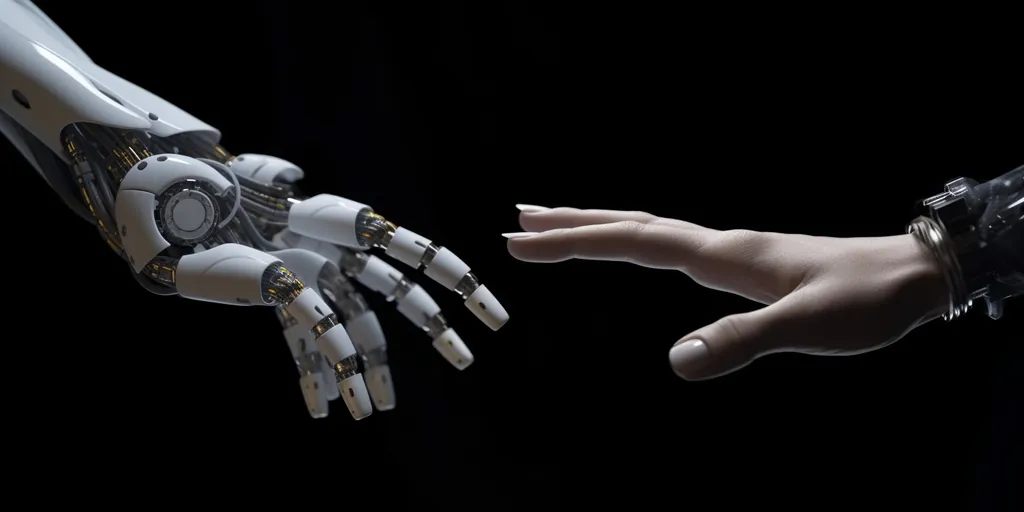
Hands aren't merely difficult — they expose every diffusion failure mode simultaneously.
27 degrees of freedom across 16 joints
[5]
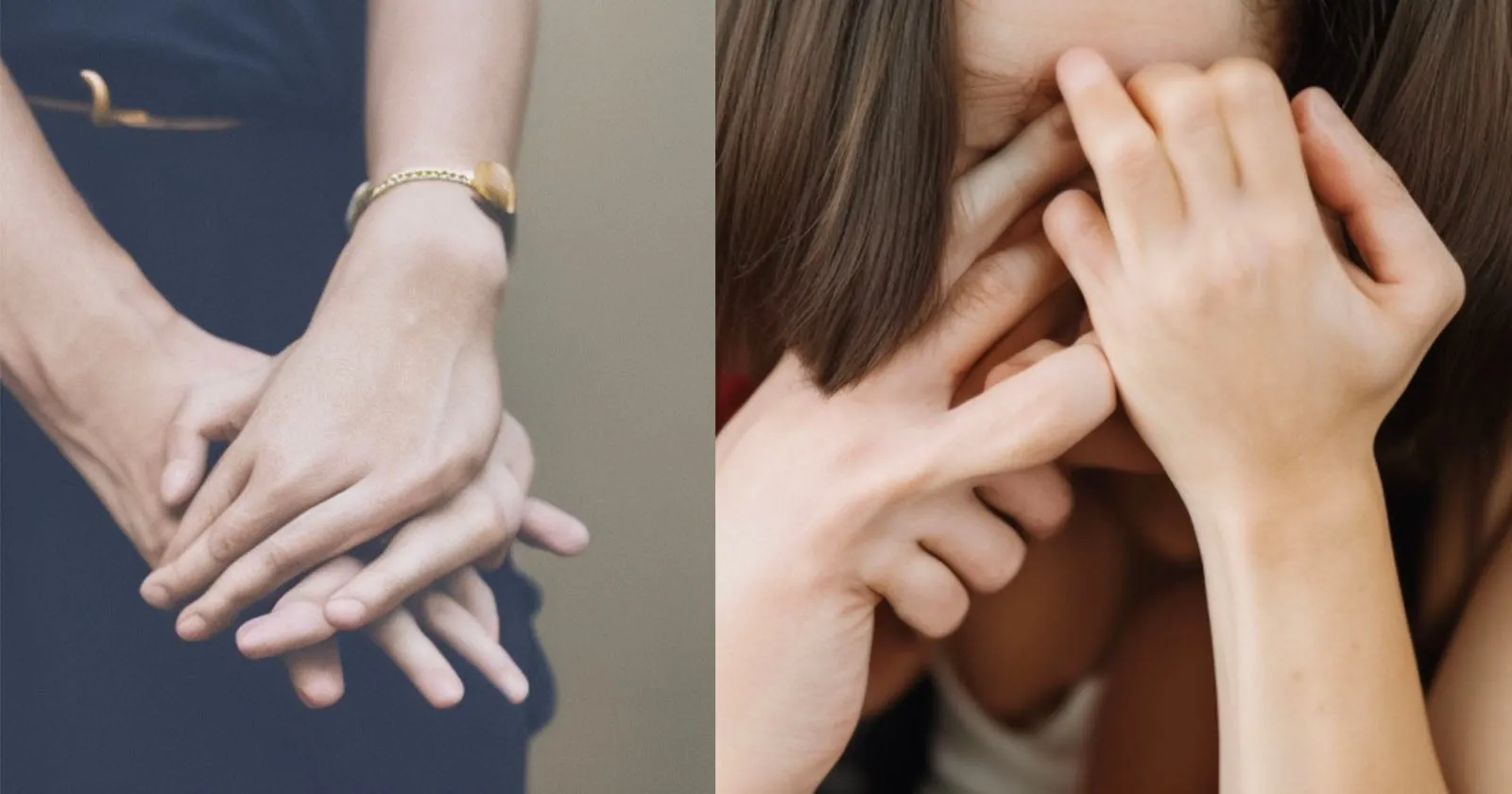
make any finger-angle error immediately obvious. Constant occlusion in training images
teaches the model "thumbs are sometimes absent" rather than "thumbs are hidden."
[2]
And the uncanny valley effect means we notice instantly — we evolved to read hands for social signaling.
[4]
"These are 2D image generators that have absolutely no concept of the three-dimensional geometry of something like a hand." — Prof. Peter Bentley, UCL [3]
Related Research
from Diffusion Models: From Noise to Image