← Default view
Atlas  ·  An architectural monograph
Vol. III Ghent · 2026 Plates 01–08
Spread No. VI  /  The room is the reason

Where the building
is the headline.

Five Ghent restaurants whose walls, beams and tile-floors already won the argument before the kitchen sent a plate, and the only two rooftops in town that earn a booking on their view alone.

Sub-topic Remarkable rooms
Depth Recon
Sources 10 official
Read time 2 min
The editor's
verdict

If you want the building to be the headline, book Het Groot Vleeshuis for the medieval hall (and the hams overhead), Pakhuis for the drama of restored iron-and-glass, Parnassus to lunch inside an actual church, or Souvenir when the room must match the food. For a view over the city, Gaston beats Yalo on panorama; Yalo beats Gaston on the calendar.

Plate I.  Het Groot Vleeshuis
Groentenmarkt  ·  1407–1419
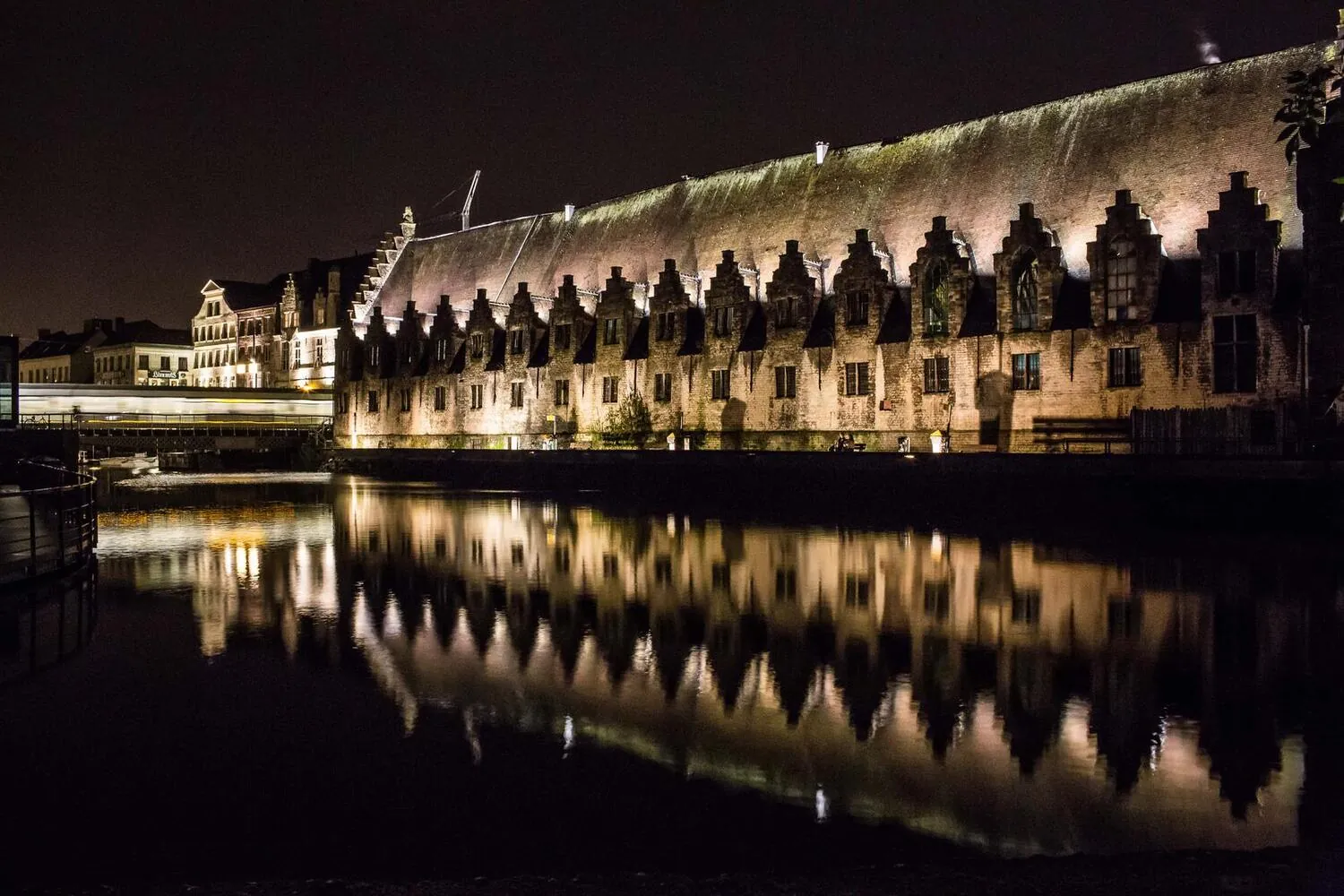
The medieval Great Butchers' Hall in Ghent at dusk, lit by warm interior light through stone window arches.
I  Groot Vleeshuis · Groentenmarkt
Plate I  /  The Great Butchers' Hall

Hams over
a guildhall.

Stone & timber · 1407–1419 · East Flemish guild architecture

"Real Ganda hams hang from the original wooden trusses; the room serves East Flemish specialities under six centuries of carpentry."

A medieval butchers' hall, intact: stone walls, the great pitched-timber roof, and a daytime canteen that uses the building as a local-product showcase rather than a fine-dining stage.

Built1407–19
UseLunch canteen
HoursDaytime only
Sources [1] [2]
Plate II.  Pakhuis
Schuurkenstraat  ·  Restoration: Antoine Pinto
Plate II  /  The 1880s warehouse

Iron beams,
glass roof,
600 m².

Late-1800s warehouse · restored by Antoine Pinto

"Industrial bones kept on view; warmth added in glass and finish over the top — the room does the work the seasoning sometimes won't."

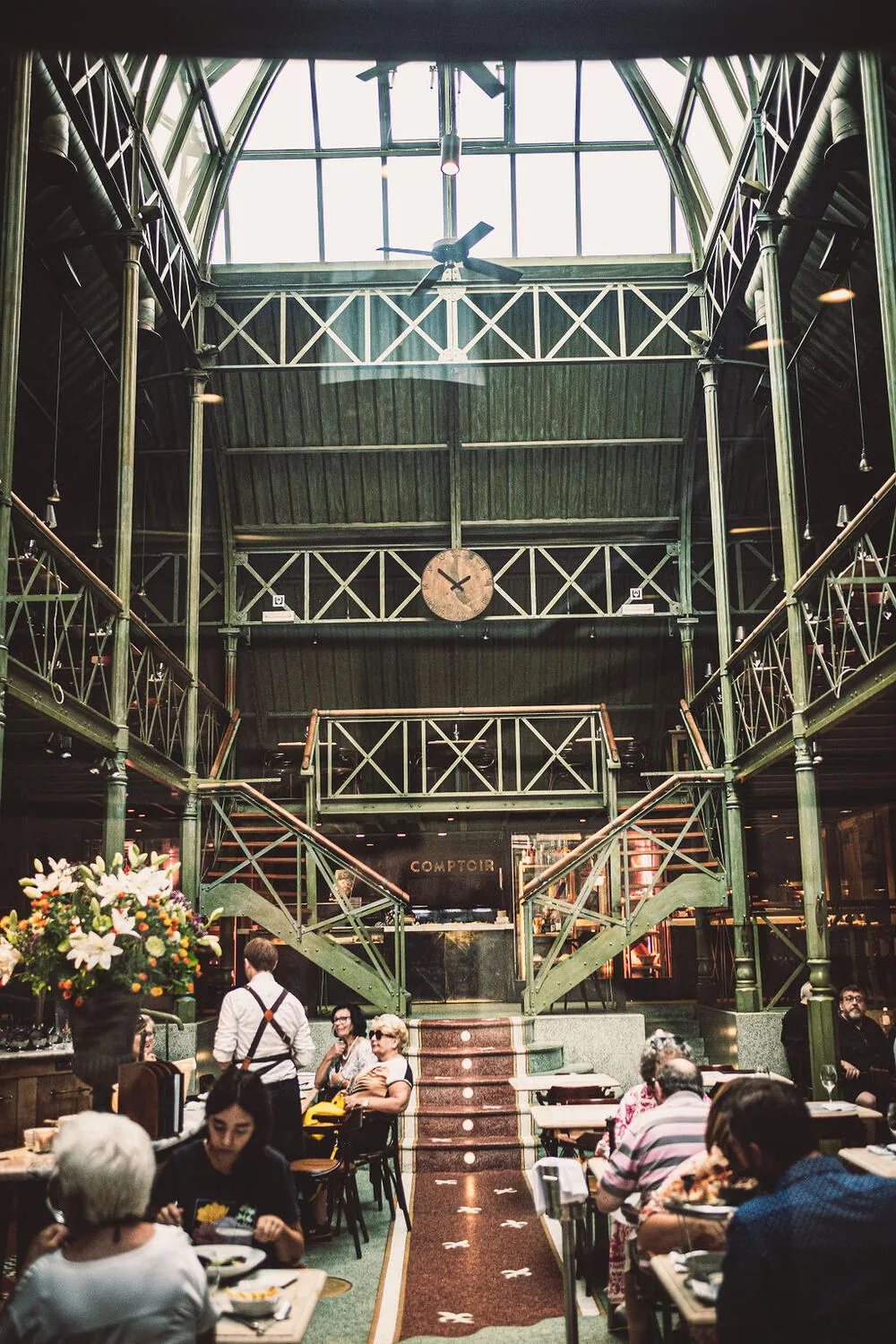
Portuguese architect Antoine Pinto preserved the iron columns and beams, capped them with a glass roof and laid 600 m² of warm interior across the bones. A French–Italian brasserie with its own house beer (Principale).

EraLate-1800s
Floorplate600 m²
CaveatRoom first, food second
Sources [3] [2]
The restored 1880s warehouse interior of Pakhuis: exposed iron beams beneath a high glass roof, a long curved bar, warm wood floor.
II  Pakhuis · Schuurkenstraat
Plate III.  Parnassus
Oudburg  ·  A Franciscan church
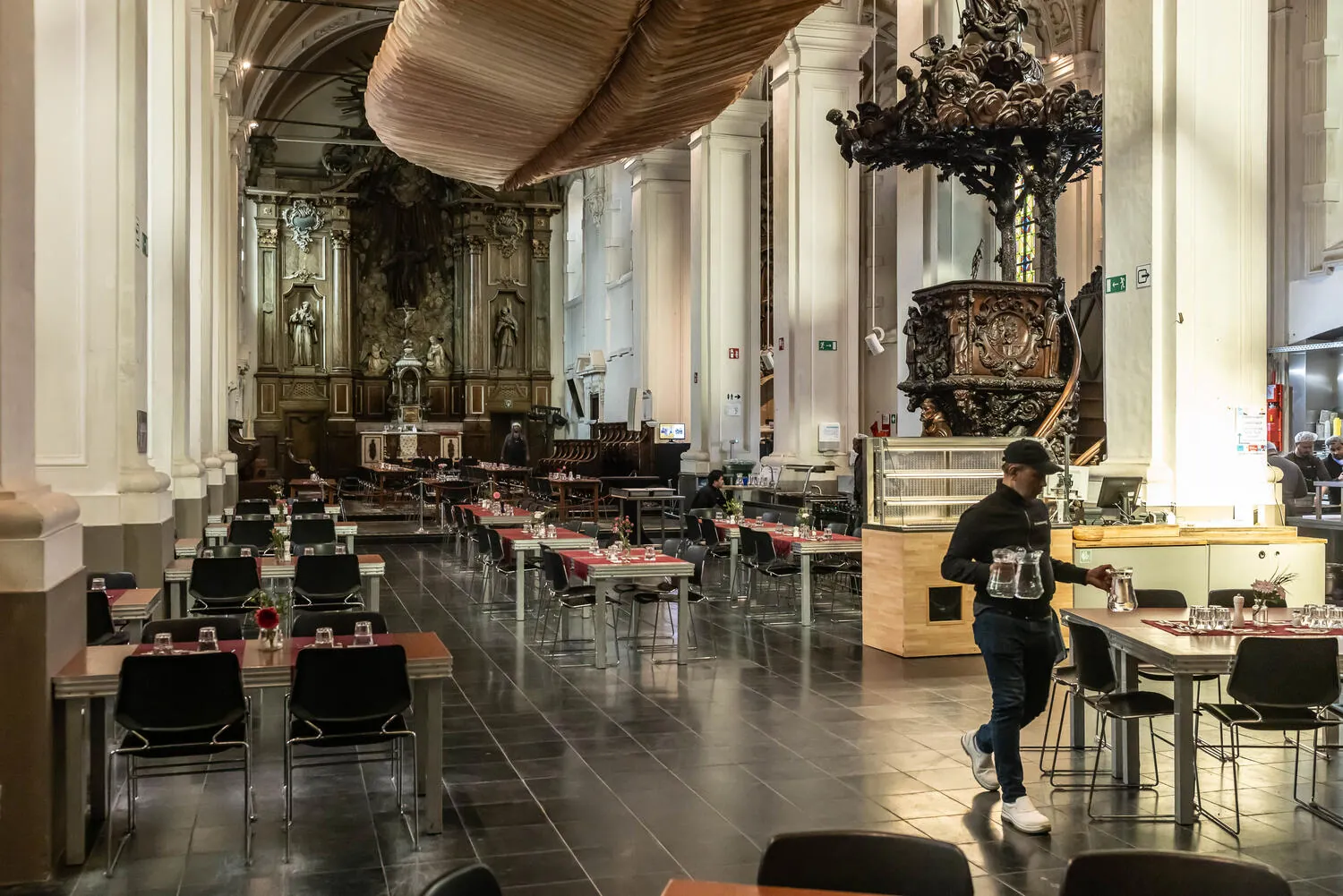
Lunch tables set inside the converted Franciscan church Parnassus, with original wooden benches and a new wooden structure dropping light from high in the nave.
III  Parnassus · Oudburg
Plate III  /  Lunch in a Franciscan church

The nave,
still the nave.

Franciscan church · original wooden benches preserved · new structure suspended in the nave

"They didn't gut the church. They added a wooden insertion high in the nave that drops light onto your table — and kept the benches you'd recognise."

A social-employment kitchen inside an actual Franciscan church. Healthy, simple lunch menu — the gastronomy isn't the point; eating beneath that nave is.

UseLunch only
MissionSocial employment
RegisterHealthy / simple
Sources [4]
Chapter Two  ·  The smaller rooms

Tile floors &
cobbled alleyways.

Two rooms where the architecture is intimate rather than monumental: a former butcher shop with the original tilework, and an 18th-century house in Ghent's medieval restaurant quarter where the street is half the experience.

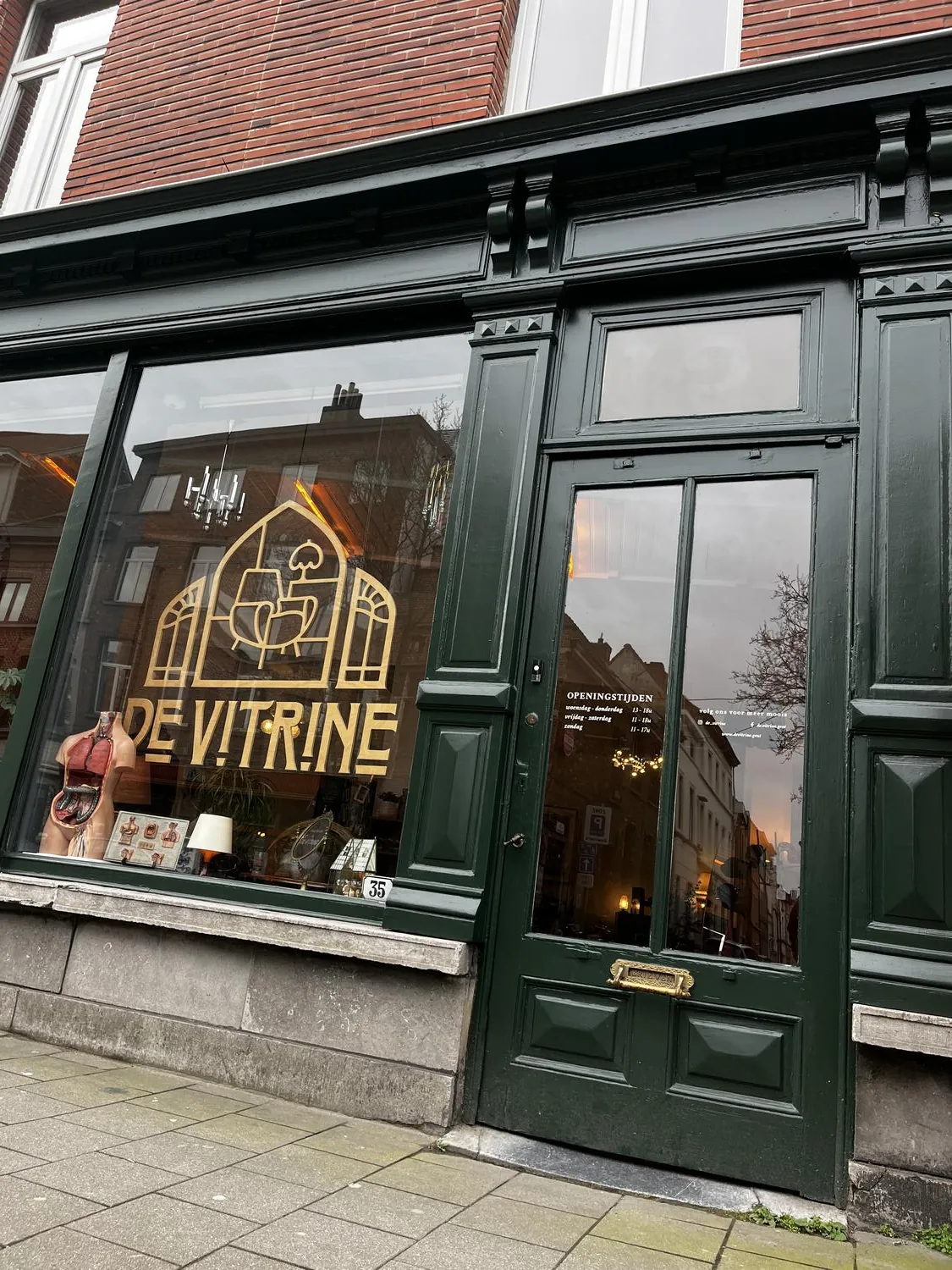
The preserved tile floor and tile walls of De Vitrine, the former butcher shop that now houses Souvenir.
IV  Souvenir · in De Vitrine
Plate IV  /  Glazenstraat

Souvenir.
The tiled butcher shop.

Former butcher shop "De Vitrine" · tile floor & wall tiles preserved · back room re-spaced

Sober, Nordic-leaning plates from a Kobe Desramaults alumnus (Vilhjalmur Sigurdarson). The room and the food agree: stripped down, considered, exact. In the red-light "Glass Street" district — small room, book ahead.

ChefV. Sigurdarson SettingTile-floor butcher BookingEssential
Sources [5] [6]
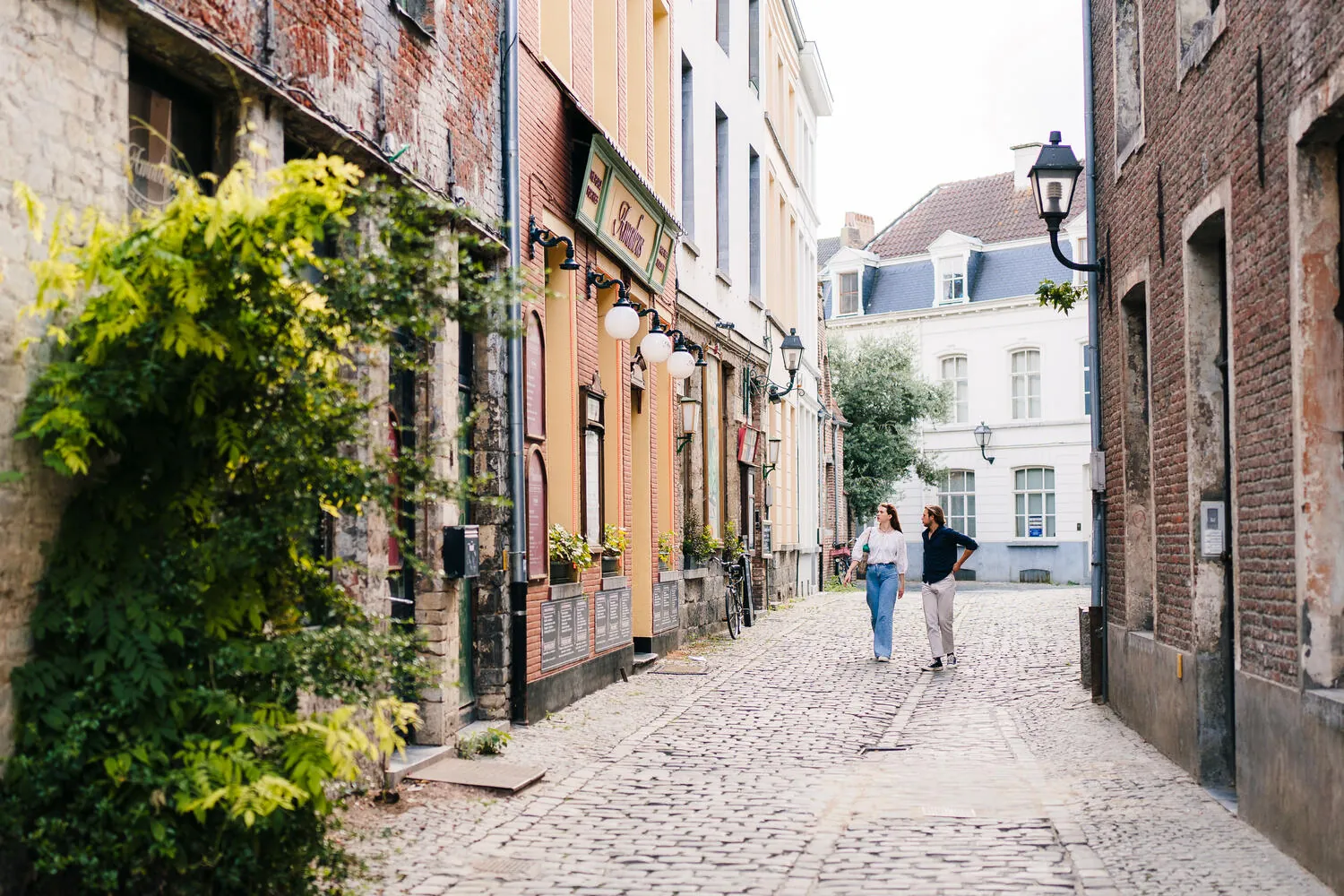
A cobbled medieval alleyway in Ghent's Patershol quarter, with eateries lined shoulder-to-shoulder along narrow streets.
V  Vier Tafels · Patershol
Plate V  /  Patershol

Vier Tafels.
An 18th-century house.

18th-century building · Patershol quarter — Ghent's oldest, cobbled medieval alleyways

The Patershol street is half the experience: narrow cobbles, eateries shoulder-to-shoulder. If Vier Tafels is full on the night, almost any neighbour wins on setting alone.

QuarterPatershol Building18th c. BackupAny neighbour
Sources [7] [8]
Chapter Three  ·  If the view is the room

The two
rooftops worth booking.

Ghent has only two real rooftops worth the climb. They split duties: one wins on panorama, the other on calendar.

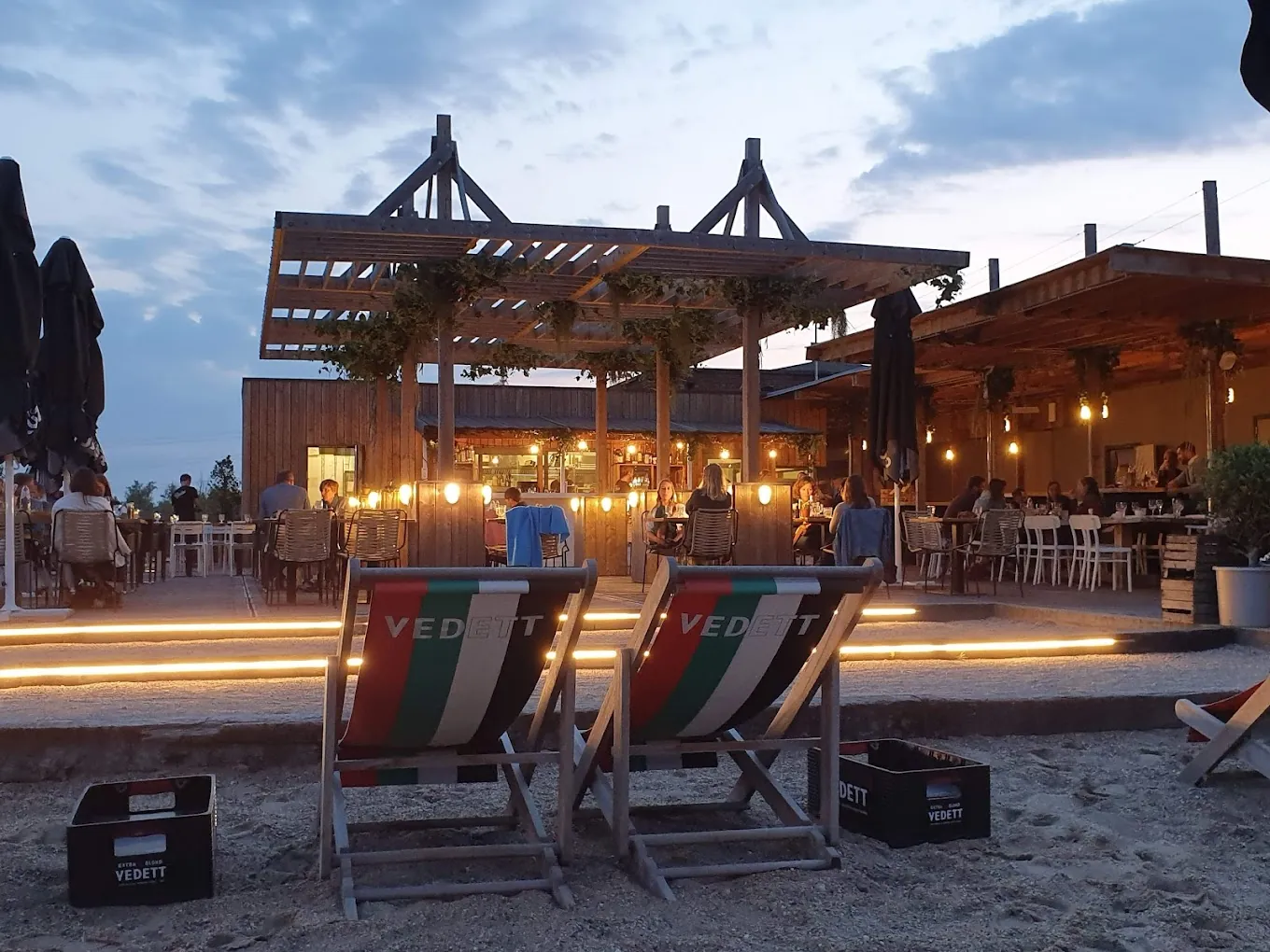
Gaston Rooftop Bar & Restaurant in Ghent — open-air terrace with a wide skyline view.
Best panorama
Plate VI  /  Rooftop · summer pop-up

Gaston Rooftop.

Pop-up · open July–August only · reservations essential

Arguably the best skyline view in Ghent. The catch is the calendar: two months of the year. If you're here in summer, this is the rooftop.

WindowJul–Aug ViewBest in city BookingEssential Inside?Open-air pop-up
Source [9]
Yalo Rooftop on the 6th floor of Yalo Urban Boutique Hotel — terrace seating with a view over the historic centre of Ghent.
Centre & calendar
Plate VII  /  6th-floor terrace

Yalo Rooftop.

6th floor · Yalo Urban Boutique Hotel · only rooftop inside the historic centre proper

Open in summer with views across the medieval roofline of the old town. Lower on raw panorama than Gaston; higher on access — and the option of pre-dinner drinks above the centre, not at its edge.

WindowSummer ViewOld-town roofline Floor6th SettingHotel rooftop
Source [10]

Picking between them: Gaston for the panorama, Yalo for the location and the option of pre-dinner drinks above the medieval roofline. If you can only book one and it's not July or August, the choice has been made for you.

Atlas  ·  Spread No. VI  ·  Ghent · 2026
An architectural monograph  ·  read the canonical